
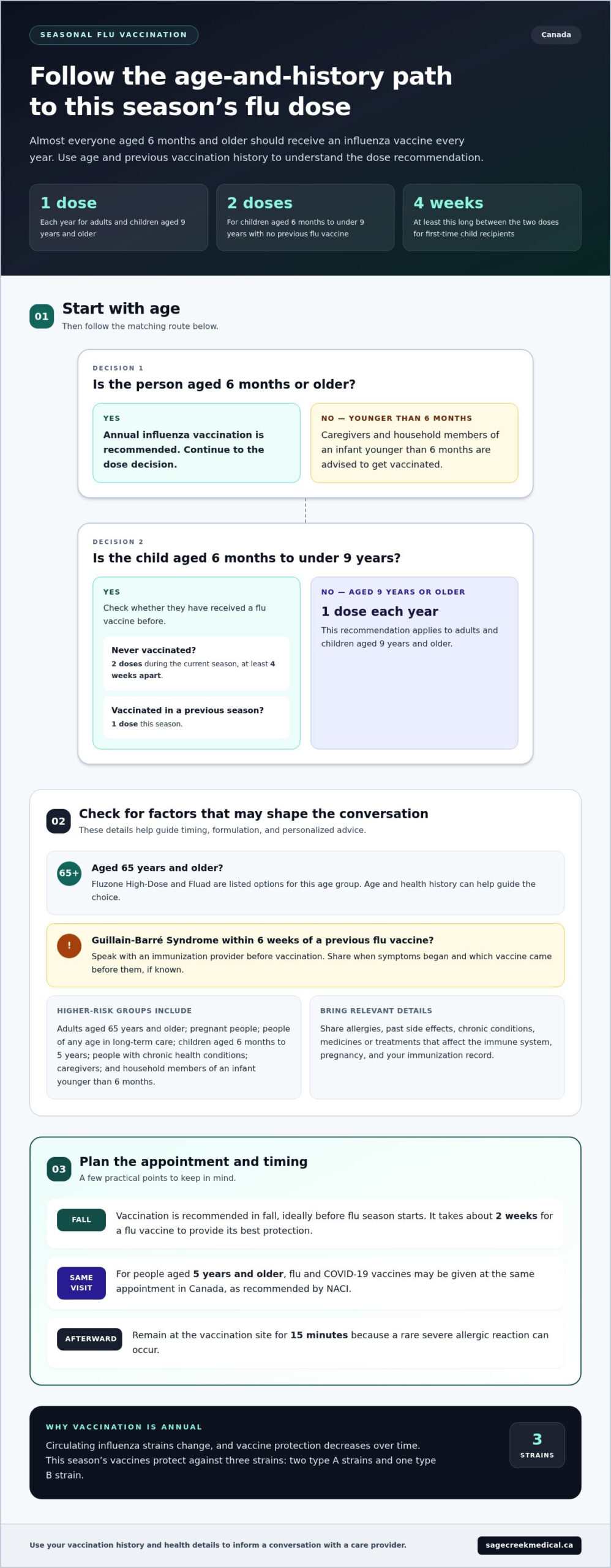
Flu shots and COVID-19 vaccines may be given at the same appointment in Canada for people aged 5 years and older, as recommended by NACI. It generally takes about 2 weeks for a flu vaccine to provide its best protection, according to the Public Health Agency of Canada.
It’s understandable to wonder whether vaccines need to be spaced apart, especially when you’re planning care for yourself or your family. This guide explains the benefits of annual flu vaccination, when to get vaccinated, and what to know about receiving a flu vaccine alongside a COVID-19 shot.
You’ll also find practical information on influenza symptoms, care and prevention, plus Winnipeg-focused guidance on flu shots and local care options. Whether you’re planning ahead or trying to understand what to do if someone at home becomes ill, this guide can help clarify your next step.
Key Takeaways
- Learn why annual influenza vaccination matters and which people may be at greater risk of complications.
- Understand how immunization records and personal health details can help inform vaccine conversations.
- Find out how annual recommendations differ by age and previous vaccination history, including when children may need two doses.
- See how vaccination fits alongside COVID-19 shots, and what to know about influenza symptoms, care and prevention in Winnipeg.
Benefits of flu vaccination
Annual vaccination helps lower the risk of influenza and its complications. Adults and children aged 9 years and older generally need one dose each year. Children aged 6 months to under 9 years who have never received a flu vaccine need two doses, at least four weeks apart. After a previous seasonal dose, children in this age group generally need one dose per season.
Eligibility for free vaccination differs across Canada. New Brunswick and Ontario offer influenza vaccines free to everyone. In Quebec, free vaccination includes adults aged 65 years and older, pregnant people, people aged 6 months and older with certain chronic conditions, and close contacts of people at risk of complications.
This season’s flu vaccines protect against three strains: two type A strains and one type B strain. Fluzone High-Dose is a high-dose option listed for adults aged 65 years and older; Fluad is an adjuvanted option for the same age group. These formulations differ from standard vaccines in their design, so age and health history can guide the choice.
People can get vaccinated at clinics and pharmacies. Pharmacy eligibility and booking processes vary by province or territory; in Quebec, New Brunswick and Ontario, eligible people don’t need a prescription for vaccination at a pharmacy. To book an appointment, use the local public health booking route or arrange a visit with a participating pharmacy or clinic.
After vaccination, remain at the site for 15 minutes because a rare severe allergic reaction can occur. A pharmacist may also recommend pneumococcal or RSV vaccines based on a person’s health condition. These protect against other respiratory infections, not influenza. Bring your immunization record and ask a care provider which vaccines fit your health needs.
Immunization records and health advice
A clear immunization record helps a care provider review your vaccine history before the current season. Keep a paper or digital copy showing the vaccine name and date received. For example, note whether you received an influenza vaccine last fall, then update the record after each new dose. Bring it to appointments so previous vaccinations can inform the conversation.
If you can’t find your record, start by contacting the clinic or pharmacy where you received the vaccine. Ask whether they can provide a copy or confirm the details they recorded. Records may be held in different places, so check more than one location if you’ve moved or changed care providers. Keep any recovered information with your current health documents.
Share relevant health details before vaccination, including allergies, past side effects and conditions that could raise your risk of severe illness. Mention medicines or treatments that affect your immune system, and tell the care provider if you’re pregnant. These details help frame advice around your circumstances rather than assuming everyone faces the same risk from respiratory viruses.
Some health histories call for a specific conversation. If you developed Guillain-Barré Syndrome within six weeks of a previous influenza vaccine, speak with an immunization provider. Write down when symptoms began and which vaccine preceded them, if you know. This timeline gives the provider useful context when discussing future vaccination.
Use your record to track more than influenza immunization. Add COVID-19 vaccines and other respiratory vaccines separately, with their dates and names. This makes it easier to discuss overlapping appointments and side effects without confusing one vaccine with another. If you have questions about how your history affects seasonal vaccination, discuss your immunization questions with a care provider.
Annual influenza immunization recommendations
In Canada, almost everyone aged 6 months and older should receive an influenza vaccine every year. Fall vaccination is recommended, ideally before flu season starts. Annual immunization matters because circulating influenza strains change, while vaccine protection decreases over time. A dose from last season isn’t a substitute for this season’s vaccine, even if it caused only mild side effects.
Recommendations are especially important for people more likely to develop complications. This includes adults aged 65 years and older, pregnant people, and people of any age living in long-term care. Children aged 6 months to 5 years are also among the groups for whom vaccination is particularly recommended. People with chronic health conditions, caregivers, and household members of an infant younger than 6 months are also advised to get vaccinated.
Age and vaccination history help determine the number of doses a child needs. Children aged 6 months to under 9 years who have never received a flu vaccine need two doses during the current season, at least four weeks apart. Those who received one or more doses in a previous season need one dose. Adults and children aged 9 years and older need one dose each year.
Vaccine formulation can also depend on age and health history. Fluzone High-Dose and Fluad are listed for adults aged 65 years and older. A pharmacist may recommend pneumococcal or RSV vaccines based on a person’s health condition. These vaccines address other respiratory illnesses, so tell the pharmacist about existing conditions and recent immunizations.
Before booking an appointment, consider who at home may face greater risk. For example, protecting eligible household members can help reduce opportunities for influenza to spread to a young infant. If you developed Guillain-Barré Syndrome within six weeks of a previous influenza vaccine, discuss your history with an immunization provider before vaccination.
Influenza symptoms, diagnosis, treatment, and prevention
Influenza symptoms can disrupt daily routines and range in severity. If you feel unwell, note when symptoms began, how they change, and whether they interfere with eating, drinking or regular activities. Sharing these details with a care provider helps guide an assessment. Symptoms alone don’t establish which respiratory illness caused them, so avoid assuming influenza is the only possibility.
Diagnosis and care depend on the person’s symptoms and health circumstances. A care provider can assess the illness and advise what steps suit the individual. People at higher risk of complications, including adults aged 65 years and older, should pay particular attention to changes in their condition. For severe symptoms or concerns about worsening illness, seek medical advice promptly.
Prevention combines vaccination with practical steps that reduce the spread of respiratory illnesses. Stay home when you’re sick, cover coughs and sneezes, clean your hands, and avoid close contact with others while unwell. These habits are especially important around infants and people with health conditions who may face greater risks from infection.
Vaccination remains useful even though it doesn’t prevent every respiratory illness. The influenza vaccine doesn’t protect against COVID-19, avian influenza A(H5N1), or respiratory syncytial virus (RSV). The Public Health Agency of Canada says it generally takes about 2 weeks for a flu vaccine to provide its best protection. Plan vaccination ahead of influenza activity where possible.
People aged 5 years and older may receive influenza and COVID-19 vaccines at the same time, according to NACI. After vaccination, remain at the clinic for 15 minutes because a rare serious allergic reaction can occur. If trouble breathing or swelling of the face or throat develops after leaving, call 911 immediately. For help assessing symptoms or discussing prevention, book a medical consultation.
Sage Creek Medical Center: Walk-in Clinic Services
Sage Creek Medical Center offers walk-in services for people seeking medical attention or guidance about seasonal influenza. If you’re unsure how symptoms relate to your health history, a visit can help you discuss your concerns with a care provider. Family medicine consultations can also support ongoing conversations about preventive care and your health needs.
People managing chronic conditions can discuss how respiratory illnesses fit into their overall care. Women’s health services provide another setting for health conversations across different stages of life. Bring your immunization record and questions, such as whether vaccine timing fits your circumstances or what symptoms need attention. This helps keep the discussion focused on your needs.
For care or health guidance in Winnipeg, contact Sage Creek Medical Center or visit Sage Creek Medical Center online.
Make seasonal prevention part of your care plan
A practical health plan is easier to follow when it fits your household’s routines. Set aside time to review seasonal care needs, note any questions that have come up, and include family members who may need support. A calm conversation can help turn uncertainty into a clear next step.
Flu shots can be one part of a broader conversation about symptoms, prevention and your personal health history. You don’t need to have every answer before seeking guidance. Start with the concern that matters most to you, then discuss what would be useful for your circumstances.
For a local place to continue that conversation, explore your next care step. Taking time to plan can make seasonal health decisions feel more manageable for you and your family.
Frequently Asked Questions
Can I receive my flu shot at the same time as my COVID-19 vaccine?
Yes. In Canada, NACI says people aged 5 years and older may receive influenza and COVID-19 vaccines at the same appointment. This can make it easier to plan seasonal vaccinations together. For younger children, the timing of influenza vaccination alongside other vaccines may depend on the child’s circumstances. A caregiver can discuss the child’s schedule with an immunization provider.
Is it flu or COVID-19?
Symptoms alone may not clearly distinguish influenza from COVID-19 because both can cause respiratory illness. Consider when symptoms began and whether you’ve had contact with someone who was ill, then share those details with a care provider. They can assess your situation and advise whether testing or other care is appropriate. Stay home while sick to reduce the chance of spreading infection.
Are flu and influenza the same thing?
Yes. “Flu” is the common name for influenza, a respiratory illness caused by influenza viruses. The terms refer to the same illness, not separate infections. For example, an immunization record may say “influenza vaccine,” while everyday conversation calls it a flu vaccine. COVID-19 is a different illness caused by a different virus, even though some symptoms can be similar.
Can the flu vaccine give me the flu or other respiratory illnesses?
No. The influenza vaccine does not cause influenza, though mild reactions such as a sore arm or brief flu-like feelings can happen. These reactions are different from having influenza. The vaccine also doesn’t protect against COVID-19, avian influenza A(H5N1), or RSV. If symptoms develop after vaccination, consider possible causes and seek medical advice if you’re concerned.
Do I need to get vaccinated against influenza (flu) and COVID-19 every year?
Annual vaccination is recommended because influenza and COVID-19 viruses change, and vaccine protection decreases over time. A dose from a previous season may not provide the same protection against viruses circulating now. Think of seasonal vaccination as a recurring part of preventive care, rather than a one-time decision. Your age, health history, and previous doses can also guide the discussion.
How long does it take for the vaccines to provide full protection?
It generally takes about 2 weeks for an influenza vaccine to provide its best protection, according to the Public Health Agency of Canada. COVID-19 vaccines also take approximately 2 weeks after vaccination to reach full effectiveness. This means protection builds over time, rather than immediately after the appointment. Factor that interval into your seasonal planning and conversations about exposure risks.
One Response