
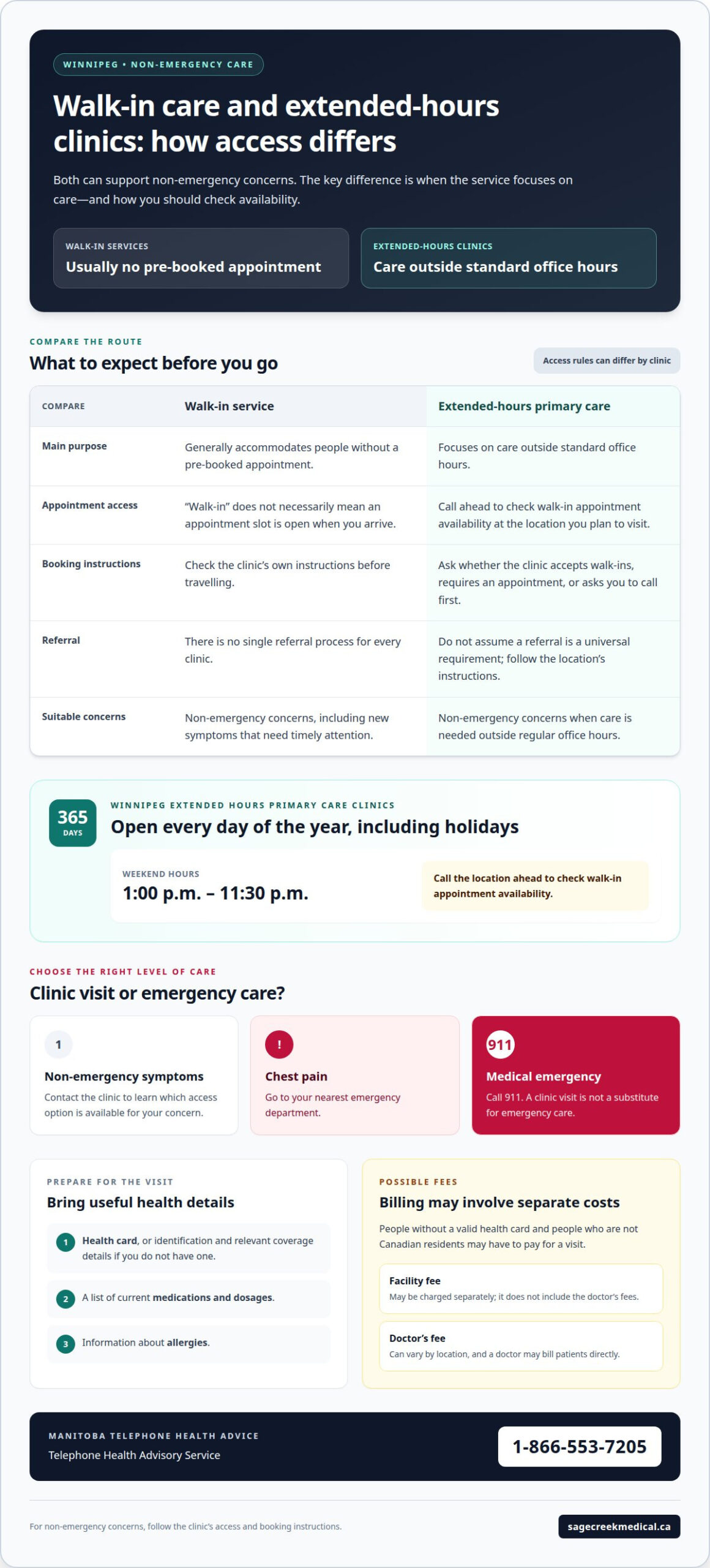
In Winnipeg, Extended Hours Primary Care Clinics are open 365 days a year, including holidays, with weekend hours from 1:00 p.m. to 11:30 p.m. Call ahead to check walk-in appointment availability at the location you plan to visit. For a medical emergency, call 911.
It can be difficult to know where to turn when you need care outside regular office hours. This guide explains how to access an after-hours clinic, what to expect when booking, and what to bring to your visit. You’ll also learn when fees may apply, particularly if you don’t have a valid health card, and how clinic hours can shape your plans. With a clear sense of the options, you can take the next step with greater confidence and focus on getting the care you need.
Key Takeaways
- Understand how after-hours clinics differ from walk-in services, so you can choose the right route for non-emergency care.
- Find out whether your clinic requires an appointment or advises calling ahead before you travel.
- Prepare for possible fees if you don’t have a valid health card, and bring your medication and allergy details to the visit.
- Learn how Sage Creek Medical Center’s walk-in clinic and primary care services may support your healthcare needs.
How Do You Access the After-Hours Clinic?
In Winnipeg, start by identifying whether you need routine walk-in care or an after-hours clinic. Walk-in services generally accommodate people without a pre-booked appointment, while extended-hours services focus on care outside standard office hours. Both can help with non-emergency concerns, such as new symptoms that need timely medical attention. The clinic’s access process determines whether you can arrive directly or need to arrange a visit first.
Do I need an appointment or can I walk in? Winnipeg’s Extended Hours Primary Care Clinics advise calling ahead to check walk-in appointment availability. Access can vary by clinic, so don’t assume you can be seen simply by arriving at the door.
There isn’t one referral process for every clinic. Before travelling, use the clinic’s own booking instructions to find out whether it accepts walk-ins, requires an appointment, or asks you to call first. A referral should not be assumed as a universal requirement. For example, someone with a sudden illness can first check whether the location offers walk-in appointments that day.
When you call, briefly explain your symptoms and when they began. Ask whether the clinic can assess your concern, how to book, and what information to bring. This helps staff direct you to the right appointment process. A doctor can assess urgent, non-emergency concerns, but clinic visits aren’t a substitute for emergency care.
- For a medical emergency: Call 911.
- For chest pain: Go to your nearest emergency department.
- For non-emergency symptoms: Contact the clinic to learn about its available access option.
These steps can help you decide between a clinic visit and emergency care. If symptoms are severe or involve chest pain, seek emergency care rather than waiting for a clinic appointment. For other concerns, follow the Winnipeg clinic’s instructions, especially when you need care in the evening or outside regular office hours.
Appointment practices at after-hours clinics
Booking rules vary, so find out how the clinic arranges visits before planning your trip. In Winnipeg, start by checking appointment availability.
Appointment Booking Requirements
Winnipeg’s Extended Hours Primary Care Clinics advise patients to call ahead about walk-in appointment availability. Calling helps you learn whether the clinic can offer an appointment and what booking steps to follow. Explain briefly why you need care, then note the time and any instructions given. If your family doctor has arranged an appointment, follow those instructions rather than assuming the clinic uses the same process for every patient.
Walk-In Appointment Availability
A “walk-in appointment” may be arranged without booking far in advance, but the term does not guarantee an open slot. Call the clinic before travelling to ask about availability. If a suitable appointment is not available, ask what other access options the clinic provides for your concern. This helps avoid mistaking “walk-in” for a promise of immediate care.
Online booking and virtual appointments are different from in-person walk-in access. A clinic’s booking instructions explain whether it accepts online requests or asks patients to call. Virtual appointment times should also be distinguished from in-person opening hours: an evening schedule does not, by itself, mean virtual visits are available then.
When arranging a visit, keep your description concise and useful. Share your main symptoms, when they started, and whether they are changing. Have your health card and medication details nearby in case staff ask for them. If you’re booking for a child or family member, clarify who needs the appointment and who will attend. These details help the care provider understand your request and explain the next step.
Before leaving home, confirm the appointment time, location, and any arrival instructions. If you hope to be seen without a set time, call first. For ongoing concerns, let your family doctor know about the visit so your care stays connected.
Fees for visitors and people without a valid health card
Patients without a valid health card, and people who aren’t Canadian residents, may have to pay for an after-hours clinic visit. Before attending, consider whether you can show a valid card and provide information about your residency status. These details may affect billing. Don’t assume every visit has the same arrangement, particularly when facility and physician fees are separate.
A facility fee may be charged separately and does not include the doctor’s fees. Doctor fees can vary by location, and a doctor may bill patients directly. Keep this distinction in mind when reviewing payment information: a facility charge and a physician’s bill are separate costs. The amount depends on the clinic’s billing arrangements and the doctor’s fees, rather than one standard charge for every location.
Bring your health card, a list of current medications and dosages, and information about allergies. You can write down each medication’s name and dose before leaving home. If you don’t have a health card, bring identification and any relevant coverage details. Clear information about medications and allergies helps the care provider assess your needs during an after-hours clinic visit.
To contact a nurse or find after-hours care, use the nurse-advice service available in your province. In Manitoba, the Telephone Health Advisory Service number is 1-866-553-7205. For emergencies, call 911 rather than waiting for telephone advice or a clinic visit.
Telecare 811 and Health Link 811 are provincial telephone health-advice options. Use the number and instructions provided for your province when seeking a non-emergency assessment. A nurse can help assess your concern and advise on an appropriate next step, such as self-care or seeking in-person health care. These telephone services don’t replace emergency care.
Before your visit, gather your health card or identification, medication list, and allergy information. If a doctor bills you directly, keep the billing details with your visit records. This makes it easier to distinguish a facility charge from the doctor’s bill.
Clinic opening hours
Winnipeg’s Extended Hours Primary Care Clinics operate 365 days a year, including holidays. On weekends, their stated hours are 1:00 p.m. to 11:30 p.m. They provide non-emergency primary care beyond standard daytime appointments. This schedule gives people a defined option for weekend care, but it doesn’t mean every appointment time is open.
When planning an after-hours clinic visit, use the opening schedule as a starting point, then consider how appointments are arranged. A Sunday concern, for example, may fall within a clinic’s published weekend hours. Whether you can be seen depends on available appointment options, so check both the hours and the access process.
A clinic can be open during its stated hours even when appointment availability changes. Call before travelling to ask about appointments. This is especially helpful if you’re bringing a child, relying on a ride, or fitting care around work or family responsibilities.
An after-hours clinic provides primary care for non-emergency concerns. Its schedule doesn’t make it an emergency department, and opening hours alone don’t determine whether a concern is suitable for clinic care. For a medical emergency, call 911. For other concerns, use the clinic’s booking instructions to plan your visit.
For a weekend visit, note the 1:00 p.m. to 11:30 p.m. hours, then follow the location’s process for arranging care. This helps you plan around both the operating schedule and appointment access. For local care options in Winnipeg, explore clinic services and consider which care setting fits your needs.
Sage Creek Medical Center: Walk-in Clinic Services
Sage Creek Medical Center provides walk-in clinic services in Winnipeg, along with family medicine consultations, women’s health services, and chronic disease management. These services can help with non-emergency concerns, ongoing health needs, and women’s health care.
You can use walk-in care for an assessment or discuss ongoing needs through family medicine and chronic disease management. If you’re unsure which service suits your concern, explain what you need when arranging your visit. Emergency situations require emergency services, not a walk-in clinic.
For care that fits your needs, contact Sage Creek Medical Center or visit sagecreekmedical.ca.
Choose a Care Path That Fits Your Needs
Choosing between a walk-in visit and an after-hours clinic depends on your concern and when you need care. For a non-emergency issue outside your regular schedule, an after-hours clinic may be an option. Ongoing health needs may benefit from a continuing relationship with a family care provider.
Sage Creek Medical Center offers walk-in clinic services, family medicine consultations, and women’s health services in Winnipeg. These services can support an assessment or care for needs that benefit from follow-up. Emergency situations require emergency services, not a walk-in clinic.
Consider what kind of care would help you take the next step. Contact Sage Creek Medical Center to learn about its services and find a suitable path forward.
Frequently Asked Questions
What Counts as an Urgent Medical Problem?
An urgent problem needs timely assessment but isn’t necessarily a medical emergency. Sudden illness, worsening symptoms, or an acute concern may warrant prompt care. For chest pain, go to the nearest emergency department. Call 911 for a medical emergency. A clinic appointment is intended for non-emergency care, so choose emergency services when symptoms indicate immediate danger.
When are the clinics open?
In Winnipeg, Extended Hours Primary Care Clinics operate 365 days a year, including holidays. Their weekend hours are 1:00 p.m. to 11:30 p.m. Hours and services can differ across Canada, so the schedule in one city may not apply elsewhere. For example, clinic arrangements vary by location in Nova Scotia.
Who can get an appointment?
People seeking care at participating-provider after-hours clinics must book an appointment; those clinics don’t accept walk-in patients. The booking process, rather than arriving without an appointment, determines access. If you’re arranging care for a family member, be ready to describe their concern and share relevant health details. People without valid health cards may still attend, but charges may apply.
How can I find an after-hours clinic near me in Canada?
Start with your city or province name and look for local extended-hours primary care listings. In Winnipeg, search for Extended Hours Primary Care Clinics, then call the location about appointment availability. In Nova Scotia, participating clinics are located within Nova Scotia Health facilities, although physicians operate them. Confirm the location and booking process before travelling.
What does an after-hours clinic visit cost in Canada?
There isn’t one fee that applies across Canada. Patients without a valid health card or who aren’t Canadian residents may have to pay. A facility fee may be separate from the doctor’s fee, and a doctor may bill directly. The physician’s charge can vary by location, so the total depends on the clinic’s billing arrangements.
Does provincial health insurance cover after-hours clinic visits?
In Winnipeg, Manitoba Health billing applies to insured medical services, while uninsured services may be charged directly to patients. Coverage depends on the service and the person’s provincial health coverage. If you’re visiting from another province or country, bring your health card or coverage information. A clinic visit may still involve separate facility or physician charges.